

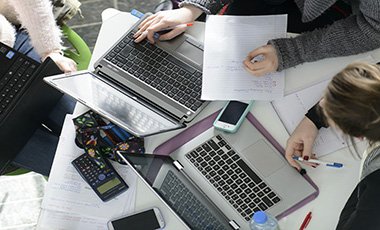
Coding theory is a major component of Applied Algebra. It has many applications in the mathematics of communications and has many links with other scientific disciplines, such as electrical engineering and computer science. Coding theory arises in almost every imaginable digital communications and storage system. In UCD, it is taught at the undergraduate level in the module MATH30180 An Introduction to Coding Theory.
About this initiative
The 360 VISTA project involved student co-created, 360o photorealistic digital twins of real-world industrial site environments for use in virtual, immersive, interactive and contextually situated learning and assessment experiences. The primary aim of the project was to develop digital means to authentically bridge the gap between laboratory-based training in life sciences education and the reality of industrial applications, contexts and magnitudes of scale. The positive impact of this approach has inspired our creation of a diverse suite of bespoke tours with various industrial, cross-disciplinary and community partners, spanning multiple undergraduate and postgraduate programmes.
Key outcomes: Enhancement of learner experiences as reflected in >5,500 online engagements with these resources since 2023 and directly captured in user survey positive feedback (2) acquisition/embedding of novel digital competencies for curriculum design and assessment (3) institutional, national and international dissemination of best practice through published case studies and project presentations at educational conferences/showcases.
SATLE priority area: Digital Transformation
Context & Need:
Situated learning experiences in life sciences education are dominated by laboratory practical training sessions. While this approach reflects disciplinary norms, sessions typically focus on niche, technical/psychomotor skills through predefined, sequenced activities. A limitation of this approach is that they lack tangible correlation with industrial settings where theory is applied in interconnected ecosystems, operating at much greater magnitudes of scale.
Industrial site visits offer one means to bridge this gap, where unique contextual learning can be achieved as students re-evaluate theory through the lens of application, observe dynamic interactions/challenges in large scale industrial processes, and reflect on next stage career outlets and required competencies. However, site visits are often prohibitively resource intensive for many programmes, especially for large student cohorts. In addition, they can be sub-optimal learning experiences as they are usually not recorded due to industrial confidentiality and are delivered at the pace of the industry host. Some students may struggle to fully absorb all elements presented and do not have the facility to revisit aspects of the tour. Such tours can also lack the supports to cater for diverse learner needs and physical abilities and may therefore be misaligned with universal design for learning principles.
Several drivers exist therefore to develop technology enhanced learning approaches that can achieve industrial site visit related learning outcomes but via remote, virtual site access. Furthermore, digital learning environments offer students individual control over their learning experience (e.g. pacing, repeat access, multimedia information integration, control of sound and visual stimuli, equity of site access and autonomous mobility). 360o digital capture technology was identified as a promising option to deliver on this ambition. This involves specialist cameras capable of 3-dimensional, high-definition 360o photographic mapping of physical spaces. The images can subsequently be edited, annotated, and interweaved using web hosting platforms so that remote users can derive photo-realistic, fully immersive and interactive experiences with such environments across mobile, tablet, desktop and/or VR devices. Importantly, interactive multimedia “hotspots” can be embedded along the tour (e.g. instructional videos, photos, 3D models, pdfs, weblinks, surveys/forms etc) to scaffold learner experiences. Working with students as co-designers to optimise end user experiences/engagement, we saw great potential for tailored, impactful learning experiences
Goals and key activities.
A critical goal in the successful delivery of this project was a commitment to develop new competencies in 360o photography, digital editing and the use of virtual tour software to create effectively sequenced tours, create interactivity and embed high quality multimedia elements and, support user navigation. This was embraced by the project lead on the basis that success in this endeavour would create new avenues for long term curriculum and assessment design within our school. However, it should be made clear that the technology was always only considered as a means to achieve our pedagogical goal of contextually situated learning (as opposed to the project being driven by a perceived need to satisfy a technological goal). The original, proposed project activities and outcomes can be summarised as:
Activities:
- Use of Insta360 X3 camera and Zoom Ambisonic/Rode Go II recording to 360 map industrial sites & processes.
- Source industry partner multimedia on process training and/or key competencies for incorporation into interactive tour hotspots.
- Co-design virtual tours with students using Kuula Pro, cloud-based software incorporating UDL and constructivist, experiential learning principles.
- Deploy virtual tour with 3rd year biotechnology class (Oct 2023).
- Employ educational research best practice to design/deliver student feedback surveys for qualitative/quantitative analyses of impact.
Outcomes
- Creation of high quality/high student engagement digital resources for contextually situated learning
- Disseminate project aims, outcomes and insights via UCC SATLE showcase
- National/International conference presentation of 360 VISTA design for life science education
- Build networks to share/embed transformative impact of 360 VISTA approach.
Key stakeholders involved
Student co-creators:
Sam Waldron was recruited to the project through the SATLE fund and was a 3rd year undergraduate and perfect student representative as he worked in a medical device company, overseeing the use of VR in staff training for line clearance protocols. Sam was uniquely placed to provide excellent insights on aspects of professional use of digital training technology and to advise on design elements to optimise student user engagement.
Student users:
Bespoke user surveys were deployed post 360 virtual tours to secure broad feedback on student user experiences, to inform iterative redesign.
Industry collaborators:
Reciprocal arrangements were used to engage industry collaborators, such that access to 360 tours of respective sites were provided to industry collaborators for their own training/promotional purposes.
Challenges:
Overall, this initiative has been a resounding technological, pedagogical and collaborative success, resulting in implementation across multiple programmes and fostering new disciplinary and community partner collaborations, to an extent that has far exceeded the originally proposed aims and outcomes.
Strategic alignment with national policies and relevant SATLE priority area
Exploring emerging technologies:
The SATLE initiative prioritises digital transformation as a key area for teaching and learning enhancement, specifically exploring the potential of emerging technologies. This is also emphasised within the National strategy for higher education to 2030, which calls for student learning through state-of-the-art resources. Photorealistic virtual tours represent precisely this type of innovative technological application, allowing students to digitally engage with physical spaces and real-world contexts within their curriculum. It is important to highlight that all technology, software and equipment employed in the project did not require specialist IT competencies. This was to ensure autonomy among educators to design, create and retain editorial ownership of such resources through the use of consumer ready digital equipment and platforms. Therefore, the design and deployment roadmap offered by the 360 VISTA project can be readily reproduced/adapted across HEIs and wider educational settings, offering low resource input – high impact return to deliver on national strategic aims for digital transformation within the higher education sector.
Innovation, collaboration, and enhancement of teaching and learning practices:
SATLE funding emphasises innovation, collaboration, and enhancement of teaching and learning practices across Irish higher education institutions. The 360 VISTA project offers an ideal template approach to advance these objectives on multiple levels. The technology directly enhances student engagement through active, self-directed exploration rather than passive content consumption. It is also a highly adaptable approach that fosters broad stakeholder collaboration, which we continue to develop with new industry, community and inter-disciplinary partnering. This also reflects the National strategy for Higher Education to 2030 call for outward-facing systems with bidirectional flows of knowledge between institutions and external communities. We have expanded beyond the original vision of the project to create multiple tours across diverse settings such as field sites, clinical environments, laboratory and industry facilities that would otherwise be access limited. While these resources bring interdisciplinary connections to life for students, they can also be deployed for impactful community initiatives to support resilience, empowerment and lifelong learning.
Equity/Equality, Diversity and inclusion as a critical lens for development:
SATLE commitment to inclusive, student-centred pedagogies reflects the national forum report on Next Steps for Teaching and Learning: Moving Forward Together. In particular, the recommendation to “Employ Equity/Equality, Diversity and Inclusion (EDI) as a critical lens through which developments and changes across Teaching & Learning are considered”. The 360 VISTA approach is fundamentally aligned with this objective and realises a genuine opportunity to engage all students equally and individually at the level of their needs. Students can control and investigate environments at their own pace, return to complex locations multiple times, and access spaces outside traditional timetabling constraints. This flexibility particularly benefits part-time learners, students with disabilities, and a modern student cohort who may be balancing work or caring responsibilities. Thus the 360 VISTA approach democratises learning opportunities while delivering on institutional ambitions for disciplinary pedagogical rigour coupled with real world connectivity, cutting edge digital learning development and universal design for learning.
Innovation in specified SATLE priority area
Use of emerging tools for novel pedagogical approaches:
Experiential learning is a core principle within digitally delivered curriculum and teaching, sometimes referred to as electronic experiential learning (EEL) or digital experiential learning (DEL). Here the transformative opportunity is delivered through the unique flexibility, accessibility, interactivity and multi-modality which can be engineered into technology enhanced learning (TEL) design.
Innovation in the 360 VISTA project was achieved by integrating distinct, emerging technologies into a cohesive pedagogical solution for such experiential learning, uniquely rooted in real world contexts. As described above, all tools used in this initiative were selected on the basis of being appropriate for non-specialist users to ensure autonomy and reproducibility. However, their convergent and creative use presents a novel methodology to transform educational experiences. These included;
360-degree camera technology, which captures immersive, high-fidelity spatial data that preserves authentic environmental context, structural details, spatial relationships, and atmospheric qualities/sounds that neither static imagery, nor computer graphics simulated virtual environments can authentically convey. This creates a foundation of experiential realism that is central to the envisaged contextual learning.
Generative AI technology has also been leveraged in creative ways to optimise tour design and interactivity. For example, AffinityTM software has allowed us to explore generative augmentation of 360 virtual environments. We can create bespoke, immersive assessment opportunities through GenAI “staging” of elements within 360 environments. This brings myriad possibilities to redesign the same environments for varying users and/or varying pedagogical goals. In addition, we have used Generative AI tools to create narration scripts, followed by text to speech conversion tools to create mp3 files to embed as narration points within the tours. Such tools can readily facilitate multilingual offerings to optimise both accessibility and foster potential international collaborations. Finally, we have leveraged photogrammetry-based AI tools to create and embed interactive 4K high resolution, 3D models into tours to enable users to transition from passive observation into active, autonomous engagement with key 360 environment elements. These continuing developments reflect how our initial digital engagement in this project have evolved into self-efficacy for further, advanced competency development within the team and, by extension, the school of microbiology, the College of SEFS and the university as a whole.
Virtual Tour hosting platforms provide the accessible, scalable infrastructure that makes these resources institutionally sustainable. Once again, this reflects a core objective within the project to provide user friendly methodologies offering creator autonomy and minimal resource/infrastructure demands to remove barriers to ready implementation and uptake. The 360 VISTA project utilised the KUULA platform which enables cross-device compatibility, analytics on student engagement patterns, integration with existing learning management systems, and the capacity to update or expand content without requiring specialised technical expertise.
In summary, the 360 VISTA initiative represents more than a technology adoption approach, it is a demonstration of the emerging technological opportunity for strategic innovation in creating sustainable, digital learning infrastructure within and across HEIs.
A short video describing our original project, with images from sample tours, is available here at the following link: https://youtu.be/4QACt2yYffY
Outcomes
| Outcome | Quantitative / Qualitative Indicator |
|---|---|
| Creation of multiple 360 photorealistic food, biotechnological and clinical setting tours with unprecedented user engagement levels relative to teaching materials previously generated within the school of microbiology. | Online interaction monitoring indicates >5,500 online engagements with our virtual tours in the last 2 years. |
| Quantifiable, positive impacts on learner outcomes following virtual tour engagement. | Student feedback surveys reported novel insights among 95% or respondents and a 90% positive experience associated with the use of virtual tours in novel forms of assessment. Other impacts included reduced anxiety as student developed familiarity with industrial and laboratory spaces (78%), an increased sense of personal competency in applied settings (60%) and increased awareness of risk management in industrial contexts (74%). |
| Creation of 360 tours with community impact. Collaboration with the National Ambulance Service to create interactive training materials for first responder volunteers on ambulance layout and equipment positioning and access. | Launched nationally by NAS through volunteer scheme coordinators. Online engagements in 12 months: 1,194. |
| Institutional recognition of impact and potential of the 360 VISTA approach to enhance pedagogical practice and digital learning infrastructure | Project lead invited to deliver VISTA project overview presentations at institutional educational showcase events, digital inclusion events and National Forum-HEA delegate meeting in UCC (June 2025) to showcase the scope and scale of impact of SATLE funding within UCC. |
| National and international dissemination of 360 VISTA project design and learner impact. |
Online publication of best practice case study on inclusive digital education, incorporating 360 VISTA, by QQI – the state agency responsible for promoting the quality, integrity and reputation of Ireland's further and higher education system. Link to case study:https://www.qqi.ie/events/rethinking-assessment-inclusive-assessment-standards-in-a-dynamic-and-changing-world Oral presentations: O’Leary (2023) – A student partnered journey into the virtual realm of molecular and cellular sciences. Digitial Inclusion showcase event, UCC. O’Leary (2024) – Generative AI and 360 mapping: opportunities to virtually redefine industrial site visits for microbiology undergraduates, Irish Microbiology Annual Meeting, Athlone. O’Leary (2024) – Virtual Industrial Site Access: The use of 360 mapping and artificial intelligence to digitally and conceptually redefine field trips for microbiology undergraduates. Microbiology Society Annual Conference, Edinburgh. O’Leary (2025) – Past, Present and Future: Impacts of SATLE funding on teaching & learning enhancement in the UCC School of Microbiology and beyond. National Forum/Higher Education Authority Delegate assembly, UCC. |
Impact
Improvements in teaching and learning, evidence of benefits to students and staff:
As highlighted above (Section 6, outcome 2), student feedback surveys revealed broad learning impacts, extending beyond traditional learning metrics. It was clear that the virtual tours achieved their pedagogical aim of meaningful connections between theoretical knowledge and authentic practice and contextualised application. Significantly, students also articulated reduced anxiety around transitioning to professional work environments, having gained familiarity with industrial settings, laboratory protocols, and workplace spatial configurations. Thus the 360 VISTA approach provided holistic benefits of allowing students to evaluate their developing competencies and reflect on self-efficacy regarding future professional roles. Many of these traits reflect impacts aligned with work integrated learning, an emerging strategic target in HEI connected curricula, and identify interactive, digital twin environments as an enabling pedagogical tool to deliver on same.
The response of staff to this approach has been equally positive across a range of impacts including novel classroom practice in both teaching and assessment, enhanced efficiency in delivery of large cohort safety training, envisioning novel community engagement opportunities and the creation of new inter-disciplinary collaborations. This is evidenced by the uptake of this approach across multiple programmes at undergraduate and postgraduate level (CK402 Biological sciences, BSc Microbiology, BSC Biotechnology, BSc Genetics, BSc Food Science, MSc Food Science). These engagements have also included the formal integration of novel, performative assessments into programme modules which draw on these virtual tour resources. These have included the design of assessments requiring students to navigate virtual environments, identify specific features, analyse spatial relationships, and apply theoretical knowledge to authentic contexts. These performance-based assessments specifically target higher-order thinking skills within Bloom’s taxonomy (analysis, evaluation, and application). Staff testimonials below further attest to the impact, and future potential, of this innovation:
“The virtual tour of a food production facility allows MSc Food Microbiology students to directly apply the principles hygienic food production and plant design, deepening their understanding and improving the experience of visual learners. It is now an established part of my module as the students have responded very positively to the virtual tours and it has greatly enhanced the evaluation of learning outcomes, most importantly making the students true practitioners in their field”
Prof Jennifer Mahony, Programme director UCC MSc Food Microbiology.
“The School of BEES sees immense potential in this innovative digital approach across a range of teaching, learning and community engagement activities. We are also currently exploring the interdisciplinary collaborations/synergies it promotes”.
Dr Barabara Doyle, Vice Head of School of Biological Earth and Environmental Sciences UCC.
360 VISTA as a model of institutional GenAI integration.
GenAI technologies have been a major disruptor within the HE sector, which has driven urgent development of strategy/policy focussed on maintaining academic/assessment integrity. However, we will need to transition from this important positioning work to leveraging the benefits of this technology and proactively engaging students with same. During the 360 VISTA project we visited industrial sites that already embrace these technologies in training and application. HEIs must equip their graduates and staff with relevant competencies to maintain our educational currency in preparing graduates for next stage careers. Our use of generative AI in the 360 VISTA approach embraces this transition to practical applications of artificial intelligence in education, demystifying the technology through hands-on implementation, aligned with academic integrity policies. It has enhanced our capacity for prompt engineering, evaluating AI-generated content for accuracy and pedagogical value, and understanding the ethical considerations of AI integration in teaching and assessment. These outcomes align strongly with Next Steps report call for prioritisation “of continuing professional development for staff, including a focus on staff digital capabilities” Engaging in the development of such competencies has positioned our school as leaders in TEL and GenAI adoption, as evidenced in our frequent invitation to dissemination events/conferences to share this work.
Staff development and Institutional Capacity building.
SATLE funding of the 360 VISTA project has allowed us to develop truly innovative pedagogical approaches whose impact has greatly exceeded our initial vision. We have demonstrated that high-quality, digital, educational resources can be created without highly specialist hardware, software, or dedicated technical teams. This approach has the capacity to become a cornerstone of digital learning infrastructure across HEIs, reflected in the scope of impact of this approach and it’s rapid, systemic integration across various programs in our school to date. It has cross-disciplinary relevance, which we continue to explore with new collaborative partners. Our ambition for the Impact award is to build out from our current success to establish local, regional and national collaborative, interdisciplinary networks engaged with this approach. This will require leading out on broad interdisciplinary and community partner impact case studies, creation and dissemination of resources (e.g. workflows, methodologies, pedagogical frameworks) and, hosting of networking events/platforms to connect practitioners, democratise innovation and accelerate sectoral advancement of this digital pedagogy.
Lead organisations
Affiliated organisations
Linked open educational resources
Initiative details
Funding programmes SATLE
Themes Digital Learning
Activity type
lepAward year
2023End year
2023Related initiatives
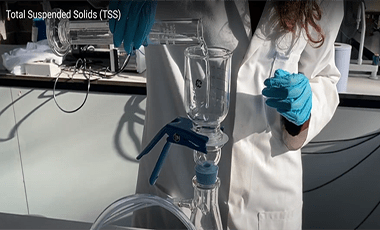
Improving Access to Practical Elements of Environmental Engineering
In an applied subject – such as engineering – practical, hands-on learning opportunities are invaluable. Student and external examiner feedback has emphasised the value that students place on laboratory and practical classes, and the desire to incorporate more of these activities into the modules offered. This project focuses on two modules which are delivered simultaneously to two cohorts of students; in-person and online.
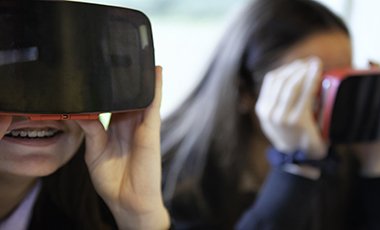
Immersive Technology in Education: A Collaborative Learning Initiative
This project is underpinned by an innovative short online course on Immersive Technology in Education. It stems from the research of Rachel Farrell, UCD School of Education, in the area of ‘democratic pedagogical partnerships’ (Farrell, 2021) in teacher education and is designed and facilitated by post-primary school teacher Mark Baldwin of SchooVR.