


Coding theory is a major component of Applied Algebra. It has many applications in the mathematics of communications and has many links with other scientific disciplines, such as electrical engineering and computer science. Coding theory arises in almost every imaginable digital communications and storage system. In UCD, it is taught at the undergraduate level in the module MATH30180 An Introduction to Coding Theory.
Initiative
Developing an Interdisciplinary Evidence-Based Practice Framework (The EVIBEC Project)
EVIBEC
About this initiative
Overview
This Learning Enhancement project has been funded through the HEA and the National Forum for the Enhancement of Teaching and Learning.
Background
The Project Team comprised of colleagues from different schools and units:
- UCD School of Agriculture and Food Science – Dr Sharleen O’Reilly
- UCD Library – Mr Diarmuid Stokes
- UCD School of Medicine – Dr Shane Foley
- UCD School of Nursing Midwifery & Health Systems – Dr Catherine Redmond & Dr Deirdre O’Donnell
- UCD School of Public Health Physiotherapy and Sports Science – Dr Caitríona Cunningham
- UCD School of Veterinary Medicine – Ms Andrea Dineen, Associate Professor Emma O’Neill & Dr Robin Farrell
The Co-Design Participants:
- UCD School of Agriculture and Food Science – Ms Sarah Browne, Ms Elaine Caffery, Ms Sophie Callanan, Ms Melissa Carubba, Ms Nicola Dervan, Ms Ruth Jeffers, Ms Lucy Kelly, Ms Aleksandra Mezynska, Ms Gracy Nasralla, Ms Liz O’Leary
- UCD School of Medicine – Ms Fara Meor Faiza, Ms Aoibheann Lally, Ms Aoife McGowan, Ms Chloe Mullen, Ms Emily Needles, Ms Rachel O’Hanlon, Ms Mariam Saleb, Mr Terence Smeaton
- UCD School of Nursing Midwifery & Health Systems – Mr Ekram Benrabah, Ms Helena McCallig, Ms Joy Omoruyi, Ms Berta Quinonero, Ms Michaela Schumann
- UCD School of Public Health Physiotherapy and Sports Science – Ms Elizabeth Bovich, Ms Lauren Diskin, Ms Aoife Friars, Ms Medbh O’Keane
- UCD School of Veterinary Medicine – Mr Christopher Hamilton, Ms Catherine Hearne, Ms Jaimeson Kass, Ms Ellen Lane, Ms Raluca Magadan, Mr Joseph O’Sullivan, Ms Christina Pizzolon, Ms Lindy Vaughan
- UCD Teaching & Learning – Associate Professor Geraldine O’Neill
Evidence-based practice (EBP) is fundamental to the delivery of high-quality healthcare with optimal clinical decision-making and maximal patient safety. It is a core competency for health professional programmes, however, despite inclusion in most healthcare curricula, a gap between best EBP and actual clinical care is consistently reported in the literature. A recent Irish HEI review of EBP teaching supported this, finding that EBP was infrequently embedded through curricula and recommending that its teaching should be scaffolded across all professional entry level programmes and actively integrated with clinical teaching (Lehane et al. 2017).
There is a strong case for designing an interdisciplinary EBP curriculum. With core importance across all professional health care programmes and similar approaches relevant to and utilised in each, the competencies required transcend the disciplines and can be developed in a similar way in each. Additionally, interdisciplinary teams are essential to effective clinical practice, highlighting the value of a united commitment to, and shared understanding of, the principles of best practice. A trans-curricular approach would not only promote the effective sharing of expertise and resources it would also align disciplines with shared EBP language, knowledge and skills, thus facilitating integrated clinical practice.
Goals
The project aim was to develop a novel, cross-discipline, vertically integrated framework and associated resources to optimise the teaching, learning and assessment of Evidence Based Practice (EBP) across entry-level health professional programmes.
The key objectives were to:
- Facilitate meaningful collaboration with key stakeholders including students, academic and clinical colleagues to co-design an authentic framework with a clear view to future implementation within health professional curricula
- Harness EBP approaches as a vehicle to develop student higher-order skills and 21st century graduate attributes across curricula.
- Develop an accessible and appealing interactive framework that will act as a resource to inform curriculum design and support health professional educators.
The Innovative Approach
We created an interdisciplinary project management team outlined above.
We held three co-design workshops that iteratively developed the EBP curriculum framework (~40 participants (academics, graduates, and students) per workshop). Each workshop lasted 2-hours and was delivered using Zoom (including facilitated break-out rooms) and a real-time collaborative whiteboard (https://www.mural.co/)
- Workshop 1 focused on defining EBP practitioner characteristics and how programmes support students becoming EBPs.
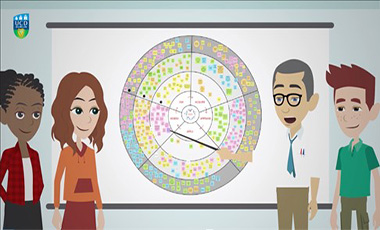
- Workshop 2 focused on the 5 A’s of EBP (ask, acquire, appraise, apply, assess) and explored perceptions of the knowledge and skills required for each.
- Workshop 3 built potential EBP learning activities for the 5 A’s and where these should sit in a programme e.g. early/late/all stages. We held project management team meetings after each workshop to reflect on learning and plan for subsequent workshops. Each workshop’s findings were shared at the subsequent workshop for data validation and to support the next steps.
A final workshop was held as part of the INHED conference (March 2021) and we sought to gain independent health professional educator input on the EBP framework, its implementation and channels for its dissemination.
Our EBP framework was completed following several project management team meetings to integrate all workshop findings into the final resource.
Results
The co-design approach with a linked team member, a student champion, per cohort of students, ensured the success of this methodology. Workshops occurred in the evenings (7-9pm) which suited students. They felt their contributions were valued and were being assimilated into the final framework. Sharing the findings of previous workshops at subsequent workshops enabled this.
The online platform and use of break-out rooms ensured that all voices could be heard. Students commented:
Workshops were very useful and the dialogue beneficial to give a voice to (and feel heard) re: what students found useful and ‘what works’ for students.
The interdisciplinary nature of the project was deemed very beneficial. Students reported that:
The interdisciplinary approach allowed us to get out of our own profession’s ‘bubble’ and “think in new /alternative ways.
Their recognition as co-designers was important and the voucher and certificate awarded for participation was of value. There was minimal retention loss across the 3 workshops.
The project team used Bloom’s taxonomy to further develop learning outcomes and mapped these to core EBP competencies. Learning activities suggested by the co-designers and project team will be added to the framework once validation is complete. A Delphi study with EBP experts is planned for this.
Resources
EBP is important for many disciplines and the approach taken here to embed these competencies into a curriculum can be adapted by any profession.
To share, promote and disseminate this work educators will have access to:
- An interactive Padlet resource containing the EBIVEC framework.
- A presentation on the process of framework development delivered at UCD DBER April 12th 2021. (Password = 33U&2G9z)
- The custom animation outlining the framework below.
Source: UCD Teaching & Learning showcase.
Project details
| PROJECT TITLE: | Developing an Interdisciplinary Evidence-Based Practice Framework (The EVIBEC Project) |
|---|---|
| PROJECT COORDINATOR: | Dr Catherine Redmond |
| PROJECT TEAM: | Dr Caitríona Cunningham, Ms Andrea Dineen, Dr Robin Farrell, Dr Shane Foley, Dr Deirdre O’Donnell, Assoc Prof Emma O’Neill, Dr Sharleen O’Reilly and Mr Diarmuid Stokes |
| SCHOOLS: | Schools of the College of Health & Agricultural Sciences |
| TARGET AUDIENCE: | Health Professional Educators in Academia or Clinical Setting |
Lead organisations
Affiliated organisations
Linked open educational resources
Initiative details
Funding programmes SATLE
Project acronym
EVIBECStatus
CompletedActivity type
lepAward year
2020Contributors
Related initiatives
UCD Community Engaged Learning and Teaching (CELT) Community of Practice
Community Engaged Learning and Teaching is considered to be transformative for students and practitioners, underpinned by civic participation in community and society. One of the strategic themes of the UCD Rising to the Future Strategy is “Building a Healthy World” a core objective of which is to “continue to build our engagement locally, nationally and internationally”. Community Engaged Learning (CEL) and Teaching affords the University an opportunity to build and strengthen strong partnerships with social and community organisations in a meaningful and transformative way. It provides faculty, students and community organisations opportunities to engage in a symbiotic manner, learning from each other whilst bridging the gap between academic learning and the lived reality(ies) of society.

Immersive Technology in Education: A Collaborative Learning Initiative
This project is underpinned by an innovative short online course on Immersive Technology in Education. It stems from the research of Rachel Farrell, UCD School of Education, in the area of ‘democratic pedagogical partnerships’ (Farrell, 2021) in teacher education and is designed and facilitated by post-primary school teacher Mark Baldwin of SchooVR.