

Coding theory is a major component of Applied Algebra. It has many applications in the mathematics of communications and has many links with other scientific disciplines, such as electrical engineering and computer science. Coding theory arises in almost every imaginable digital communications and storage system. In UCD, it is taught at the undergraduate level in the module MATH30180 An Introduction to Coding Theory.
Initiative
Mechanical Engineering Virtual Reality Experimental Pumping Rig Lab
About this initiative
Extended Reality (XR) is an umbrella term capturing three related ‘reality’ technologies; Virtual Reality (VR), Augmented Reality (AR) and Mixed Reality (MR).
This completed pilot project introduced a Virtual Reality (VR) component into a Level 7 Engineering programme.
A digital equivalent of a physical fluid power experimental rig was fully developed as a detailed CAD model, enhanced with Virtual Reality interaction functionality, and deployed on Meta Quest 3 Virtual Reality headsets.
This VR development allowed students to interact with a virtual equivalent as an alternate teaching mode to the physical rig.
The project considered multiple elements of digital education and digital transformation, addressing (i) whether students could engage in a virtual activity which provide a comparable learning experience to the physical realm, (ii) whether the transition to a virtual mode would introduce any obvious practical or pedagogical issues, and (iii) how any challenges could be overcome.
SATLE priority area: Digital Transformation
Context
Students complete a multi-stage practical laboratory experiment within the Critical Utilities 1 module in the Level 7 TU024 Engineering Reliability Management programme in the TU Dublin School of Mechanical Engineering.
The ‘Pump Laboratory’ session involves interaction with a fluid power experimental rig and multiple experimental procedures to record pressure and flow readings from the rig in a variety of system states. The recorded data from the experiments is used to create pump and system characteristic curves and charts. This experimental session is very appropriate to industrial practice and design.
The previous/existing laboratory environment consisted of one laboratory facilitator (the module lecturer), a typical cohort size is 10-16 students but with only one physical fluid power rig.
The specific rig used in the laboratory experiment is an expensive product, and the lack of multiple training rig units introduced a bottleneck in the interaction capacity of the students within the laboratory; there was insufficient time for all students to perform the separate required lab experiments independently, or even in paired rotation, within the timeframe of a single laboratory session.
This bottleneck reduced the laboratory activity to a combination of a ‘process demonstration’ by the laboratory facilitator and some ‘partial alternating interactions’ by the students.
To provide an optimal experimental interaction experience, the students should complete the full suite of practical experimental processes either individually, or in a paired setting.
Goals and key activities
One main objective and one key activity were proposed, but not to simply propose a theoretical solution, but to implement a practical solution.
- To design and develop a functioning VR equivalent of a fluid power pumping rig using an industry standard development platform (Unity).
- To deploy this VR component into a live laboratory scenario, to allow students to complete the lab as a viable alternative to the current traditional delivery
Stakeholders
The engagement from the existing module lecturer to ‘buy into’ the new formats of laboratory environment and delivery was very important.
The technical expertise, or skillset, required to develop the complete VR experience is significant. Very few staff within the Faculty have that skillset to undertake such a project.
The technical expertise required to develop a complete VR experience does not infer the technical expertise to understand the specific nuances of each physical experimental process.
In this project instance, the collaboration between ‘VR developer’ lecturer, with the technical expertise to develop VR/XR content, and the module lecturer with the technical process knowledge and willingness to embrace the ‘VR/XR end product’ was critical.
That close collaboration between staff also provided a smoother workflow for the specific beta-testing and validation of the virtual equivalent, in advance of the live project rollout for student participation.
Challenges
The design of a live in-lab VR intervention for engineering students was a new technical venture; many positives were encountered, some missteps were taken, some mistakes were made and resolved.
In many VR implementations hosted on many commercially available VR headsets, the ‘closed off’, visual nature of a ‘fully immersive’ context can cause significant anxiety for certain users, irrespective of age or gender, which can be an obstacle to user engagement in certain instances.
In many cases, this ‘closed off’, ‘immersive’ context has simply been a limitation of the technology and hardware, rather than an explicit reason to implement it as a ‘feature’.
However, with very recent developments in hardware, technology and software, the implementation of ‘passthrough’ in the design of the VR content allows the use of a ‘non-immersive’ environment, combining live visual access to real-world background with virtual elements overlaid in the foreground.
This VR intervention was designed from the outset to be a ‘non-immersive’ experience; direct visual access to the real-world background was a strong design pre-requisite.
Before the VR intervention was explained specially to students, a number within the cohort were not enthusiastic about using a VR headset, and in one case, to the point of abstaining from the lab session, based on their pre-existing experience-based anxiety towards VR technology.
However, all students agreed to participate after discussion of ‘passthrough’ concepts, and ‘non-immersion’ was fully elaborated to them.
Strategic alignment with national policies and relevant SATLE priority area
XR provides more immersive, interactive, and realistic experiences by leveraging advancements in technologies such as computer vision, sensors, graphics, and artificial intelligence.
The use of XR technology particularly, usually requires the user to wear a Head Mounted Display (HMD), or ‘headset’ which then displays or overlays digital content (text, images, 3D models, animations) on the world around them.
XR technology has existing commercial application in many fields, including gaming, healthcare and AEC (Architecture, Engineering and Construction). The ability to blend digital and physical worlds provides new modes for communication and training. In industry, the use of VR / XR improves operator training and competency, whilst reducing operator risk and reducing training costs and time.
The use of VR / XR is one of the most appropriate instances of transforming current education practices to Teaching and Learning in a Digital World.
As a learning and teaching platform, VR/XR inherently relies on engagement and interaction from the student in an active learning mode. The benefits seen in industry can translate directly into education, bringing experience-based active learning and situated learning activities into the classroom and/or laboratory space.
The technology is developing rapidly, and hardware becoming more commercially available, which in turn is dramatically increasing accessibility for academia. The crucial aspect of academic integration is the quality of developed content, ensuring it is not used simply for its own sake, but to provide high quality authentic scenarios comparable, or better, than existing physical delivery.
Innovation in specified SATLE priority area
Novel approaches
The use of VR technology to facilitate multiple simultaneous user participation in live laboratory session is a novel approach in of itself.
The existing laboratory location where the physical rig is located has its own sensitive health-and-safety concerns and spatial capacity. The use of VR technology allowed the laboratory activity to be re-located to a safer, open location with scope for movement and interactions which were appropriate for the cohort.
Validating the efficacy of virtual interactions in an alternate location also validated, to a certain degree, the capacity to deliver this content completely off-site.
The use of this VR experience allows for the integration or development of experimental data variance in the lab experiment where previously the physical rig could not; the system characteristics of the fluid power experimental rig can/will only produce a singular, repeated set of particular experimental data outputs.
The experimental variance available from a digitally constructed scenario improves the assessment capabilities of the experiment, giving a certain level of uniqueness of experimental data per student, improving the overall authentic experimental experience for the student.
Emerging tools
The use of VR technology in this instance is not a ‘cutting-edge’ emerging tool, but currently it is a very under-utilised tool in education.
This project is the first of many proposed VR/XR implementations for engineering students in the Faculty; student participation and feedback has provided valuable insights which will influence and steer the development of future student-orientated projects.
Institutional change
It is not an understatement to consider that this project is a milestone project within our Faculty and our School. It is the first live VR implementation for a complete cohort as an alternative mode of delivery, replacing a traditional ‘hands-on’ physical interaction.
It will hopefully direct a change of use of technology to embrace VR and XR within our Faculty and our School, as a comparable, high value, cost effective experience for students.
Where an institution has the capacity to deliver multiple instances of XR experiences to significant cohorts of students, the cost-effectiveness of VR/XR implementation is significant from an operation perspective and cannot be understated.
As commercial VR/XR headsets become more available and affordable, the accessibility to VR technology or hardware is no longer the primary operational obstacle in providing VR/XR education.
The primary limiting factor is the affordable authoring of authentic experience content which will allow students to participate in a comparable digital equivalent of an existing physical activity.
Outcomes
| Outcome | Quantitative / Qualitative Indicator |
|---|---|
| The development of a functioning VR equivalent of an engineering rig was carried out by a single developer with the required expertise across a timespan of weeks | The project development began in January 2025, and lab session was carried out on Thursday, 20th March 2025 from 6.00 – 9.00pm. |
| Before live/in-lab implementation, the module lecturer confirmed the proposed VR content was, at a minimum, comparable to the existing physical activity, and in some modes, provided a more user-friendly experience. | Agreement was in place with module lecturer not to run a lab until interactions were at least comparable to existing. |
| The live/in-lab implementation was delivered within the given time constraints of an existing single lab session, without over-run, suggesting a viable option for full replacement in future instances. | Module lecturer comfirmed completion of single lab session as delivered. |
| Feedback via student survey describes a strong positive engagement from the full cohort in this alternative mode of content delivery. | 9 of 10 students responded Yes to Survey Question 6.8 “Would you like to see more VR-based learning tools in your programme/modules?” |
Impact
Wider impact
This project represents an exciting pilot implementation to leverage VR and XR opportunities.
Other VR implementations fall into the category of ‘universal application’ of student skills improvement using ‘off-the-shelf VR apps’ for example, using an app such as BodySwaps to improve presentation skills.
However, this project is a specific, bespoke, engineering-based development with custom interactions and levels of complexity above a standard VR/XR learning experience.
VR/XR content authoring does not fall into the same category of other digital capabilities, e.g. video content creation, VLE content curation, which would be a current normal expectation of peers. The expertise required to develop VR/XR content is significant and is not a skill readily accessible to all colleagues.
External development of VR/XR content through third-party commercial developers is not feasible due to prohibitive associated costs.
In this case where institution staff have capacity to develop appropriate content, this capacity should be fostered/encouraged. Within the Engineering realm, there are significant valuable opportunities to develop VR/XR artifacts which can improve student engagement and learning, especially in a lab environment. Laboratory experiments are used as a primary learning tool across every year of engineering programmes; scope exists to consider the capacity to transform specialised, physical experiences into virtual experiences. This virtual format can eliminate bottlenecks such as access to physical lab spaces, equipment availability, cyclical equipment maintenance costs, consumable consumption, and removes many health and safety concerns.
Improvements to T+L
A lack of access to expensive and/or dangerous lab equipment can hamstring experiences and negate opportunities for interaction. Demonstration of equipment operation or processes which are expensive, dangerous, and/or impossible may also not be feasible in a traditional setting. Virtual interactions can provide meaningful learning opportunities, and VR/XR provides a means to demonstrate in a variety of teaching modes.
Partnerships
Various presentations of this project to colleagues and at recent external symposia engaged discussions of the application of this mode of teaching to various levels of education.
The project was delivered to a Level 7 cohort, however its suitability to Apprenticeship streams was brought up in multiple discussions. TU Dublin delivers multiple Apprenticeship streams in conjunction with SOLAS. The practical nature of many Apprenticeship programmes lends itself to process learning through repetition. It is not suggested that VR/XR activities replace all physical activities, however delivering certain activities in VR/XR as a form of scaffolded learning is very appropriate.
A process of introductory learning via digital interactions could provide manageable repetitive practice environments to students with no obvious operational concerns, as the content is simply practiced within the confines of the headset.
The recurring per-block cost of material resources/consumables in certain Apprenticeship streams is significant; introducing specific VR/XR activities as an alternative to certain physical activities could provide considerable savings in this sector.
Embedding
Two distinct obvious research opportunities exist based on the completion of this project, (i) an explicit project-specific enhancement (ii) a consideration of leveraging the technology for students in a new format of learning capacity.
The next significant step in the development of this specific project is to develop a complete VR alternative mode of delivery for the complete experiment with pre-determined experimental variance. This would represent a full digital transformation of an existing experience, and provide a very exciting opportunity for students to engage in.
The programme in which this project was delivered has a unique cohort, typically mature students already working full-time in the engineering sector attending part-time evening modules, and also typically focussed on education to leverage their future award as a means of career advancement within the field.
In surveying students after the lab session, some queried whether the capacity to complete full VR lab experiences off-site would become available within their programme. Their rationale centred around work/life balance; if a headset was provided and students could complete lab work at their own pace outside of campus at any suitable time, it would provide students additional free time to accommodate typical personal/familial obligations.
This provision of an asynchronous digital resource would represent a currently unavailable mode of learning capacity in the vast majority of engineering programmes. The opportunity to work with students to facilitate better quality time management for them at a personal level could encourage more enrolments within the programme.
The strategy could also be leveraged into Apprenticeship delivery, where apprentices are provided headsets and as such the capacity to practice manual interactions offsite without restrictions to physical equipment and space, and offsetting significant health and safety concerns in many cases.
The project was based on an initial €5,000 TU Dublin funding award via SATLE; the outcomes from this project (listed in Section 6) were very positive.
Lead organisations
Affiliated organisations
Initiative details
Funding programmes SATLE
Themes Digital Learning
Status
CompletedAward year
2024End year
2025Funding amount (€)
5000Related initiatives
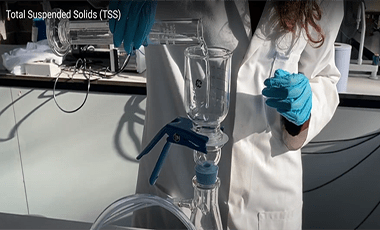
Improving Access to Practical Elements of Environmental Engineering
In an applied subject – such as engineering – practical, hands-on learning opportunities are invaluable. Student and external examiner feedback has emphasised the value that students place on laboratory and practical classes, and the desire to incorporate more of these activities into the modules offered. This project focuses on two modules which are delivered simultaneously to two cohorts of students; in-person and online.
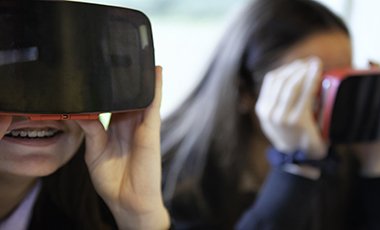
Immersive Technology in Education: A Collaborative Learning Initiative
This project is underpinned by an innovative short online course on Immersive Technology in Education. It stems from the research of Rachel Farrell, UCD School of Education, in the area of ‘democratic pedagogical partnerships’ (Farrell, 2021) in teacher education and is designed and facilitated by post-primary school teacher Mark Baldwin of SchooVR.