

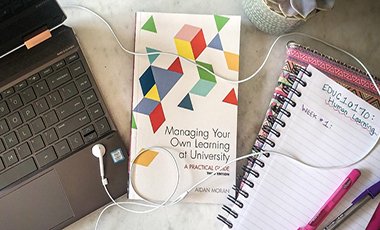
Student success at college is not just achieving high grades The National Forum for Teaching and Learning defines student success as the process by which students fulfil their potential and flourish at college and in society. This is a broader activity than simply achieving high grades. Psychosocial competencies are core to the definition of student success: these are the ‘soft skills’ or ‘non-cognitive skills’ that enable students to cope well with learning challenges, engage deeply in learning, and develop their identities as learners and as active citizens. Transitions are a key issue within this priority area, with transitions such as the move from school to college presenting both challenges and opportunities for students.
Initiative
Re-imagining Assessment and Feedback for Student Success
About this initiative
The SATLE Re-imagining Assessment for Student Success Project, deepened student-staff partnerships and re-imagined assessment and feedback across 9 campuses in ATU. The project provided an extensive suite of resources and supports for academics and students through the co-creation of an A-Z assessment literacy directory and card game resource, assessment rubrics, multiple discipline case studies, a MEd research study including 6 academic programme evaluations, a suite of masterclasses, conferences and Let’s Talk About Assessmentworkshops plus multiple discipline peer to peer evaluations and discussions. A sample of outputs produced to date include Assessment Resources – Digital Ed and outputs have been disseminated widely across the sector and internationally through the annual higher education DigitalEd Conference, now in its 5th year, the Re-imagining Assessment Symposiums and the Big Ideas book on Assessment ,following a Hackathon across three locations in ATU.
SATLE priority area: Interdisciplinary collaboration (under any of the 3 themes)
Context and key activities
The Re-imagining Assessment and Feedback for Student Success project, funded by the National Forum for the Enhancement of Teaching and Learning in Ireland (NF) through the SATLE initiative, began in June 2021. This study originated from a collaborative project between GMIT, IT Sligo, and LYIT, which at the time of commencement was known as the Connacht Ulster Alliance (CUA) prior to becoming ATU. This project was titled ‘Reimagining Assessment and Feedback for Student Success’ and it was co-led by the heads of teaching and learning. The academic year 2021-2022 is considered Phase One of this project. During this phase, the project team worked alongside three programmes (one from each institute) to explore the students’ experience with assessment and feedback, and to work with academic staff to re-imagine their own assessment and feedback practices. The second phase of the project took place during the academic year 2022-2024, and this is when this research study commenced and the programme engagement findings were presented in a unique Master’s in Education degree study by Emma McDonald and supervised by Dr Carina Ginty, Dr Mary McGrath and Dr Kevin Cunningham. Like Phase One this study focused on student and staff experience with assessment and feedback, and the area of academic integrity and GenAI was investigated.
The SATLE Re-imagining Assessment for Student Success Project, deepened student-staff partnerships and re-imagined assessment and feedback across 9 campuses in ATU. During phase one and two, the project produced an extensive suite of resources and supports for academics and students through the co-creation of an A-Z assessment literacy directory and card game resource, assessment rubrics, multiple discipline case studies, a MEd research study including 6 academic programme evaluations, a suite of masterclasses, conferences and Let’s Talk About Assessment workshops plus multiple discipline peer to peer evaluations and discussions. A sample of outputs produced to date include Assessment Resources – Digital Ed and outputs have been disseminated widely across the sector and internationally through the annual higher education DigitalEd Conference, hosted and led by ATU is now in its 5th year. In addition, a book was published titled Big Ideas book on Assessment following a Hackathon event across three sites in ATU involving 150+ staff and student champions.
The initial goals and key activities:
- Create a one-stop shop for assessment resources and a detailed directory of assessment types to support colleagues when developing or redesigning assessment practices.
- Foster a community of practice with multi-discipline groups sharing and discussing various assessment types including formative and summative assessment.
- Provide opportunities for interdisciplinary showcases and discussion on academic integrity, the use and application of assessment types and GenAI considerations.
- Support the education of lecturers both current and future, by showcasing a diverse range of assessment types that could be incorporated into their teaching practices.
Key stakeholders involved:
ATU Teaching and Learning Centre, four faculties, student champions and student ambassadors, students union, plus programme board teams in phase 1 and phase 2.
Phase 1: BA in Law with Criminal Justice (Business), BA Sociology and Politics (Social Sciences) and BA in Medical Science (Science & Health).
Phase 2: BSc in Construction Contracts Management (Engineering & Computing), BSc in Occupational Safety and Health (Science & Health) and BSc in Quality for Industry (Science & Health).
Student Champions (22) and student ambassadors (16) from programme boards (6).
Challenges encountered and how they were addressed:
ATU as a multi-campus structure design includes 9 campuses across four counties including Galway, Mayo, Sligo and Donegal and this presents challenges with communications and engaging staff and students. Despite the geographical challenges, the project team overcame these challenges exceptionally well through a robust project design, a dispersed leadership team, lead representatives assigned to each programme board team across the four faculties and well-designed engagement strategies that embraced digital teaching and learning techniques and student partnership initiatives that were both authentic and inclusive.
The key to success was the decision to have a broad multi-disciplinary team across several academic units and student champions empowered to share their views and ideas on assessment experiences. Overall, the project was well structured and the SATLE funding supported implementation and buyout of academic time to ensure meaningful engagement and a timely review of resources developed. In addition, the masterclasses and symposiums were delivered in hybrid mode and there was an option for in-person or online engagement and this maximised opportunities to join in and learn.
A showcase learning event for all and the sector has been the DigitalEd annual conference delivered in hybrid mode and this has enabled access to 500+ across the HE sector.
Strategic alignment with national policies and relevant SATLE priority area
The re-imagining assessment and feedback for student success project represents a strategic and direct response to contemporary challenges in higher education, aligning closely with broader goals for digital transformation and academic integrity in Ireland and globally. This alignment was achieved through deliberate interdisciplinary collaboration that brought together a diverse range of expertise to create a holistic and sustainable approach to changing, enhancing and re-imagining assessment in ATU and the outputs were disseminated widely across the higher education sector.
Key points to articulate the strategic value of the project and the value of interdisciplinary collaboration under the SATLE themes include:
- Digital transformation ideas in assessment and moving beyond digitising historic methods and fundamentally rethinking processes with education technology.
- Staff and students collaborating to implement new ideas on the virtual learning environment and through the project team this was supported by innovative and quality design rubrics, alignment with the National Forum T&L strategy, the QQI award standards and the EU Digital Education action plan, plus supported by professional teaching development training opportunities.
- The project had a central focus on Academic Integrity and more recently on GenAI. The project explored how the sector is moving from a plagiarism detection model to a proactive one focused on education of academic integrity through design thinking processes, training initiatives for students and staff, plus strategies for managing misconduct and plagiarism and promoting a culture of honesty.
- Central to the project was alignment with Irish, EU and international frameworks on best practice in assessment design. Pedagogy an assessment design promoting contemporary assessment that is authentic and prepares students for the real world or work was a central theme.
- Alignment with the NStEP Student Engagement Framework and the Student Success toolkit was incorporated into the student engagement plan of the project.
- Staff and students worked together to explore assessment that is relevant to future careers and while also considering AI misuse.
- Institutional Strategy at ATU was also embedded in the project design and a co-design process across the university among programme teams was a special experience in the project.
Underpinning these collaborative efforts are key pedagogical principles that ensure the changes are educationally sound and resilient to challenges like generative AI. The project team demonstrated that meaningful educational transformation occurs at the intersection of digital strategy, academic integrity, and pedagogical innovation, driven by purposeful collaboration across a multi-campus structure. This is evident in the MEd research study thesis supported by this project and provides the evidence of impact.
Innovation in specified SATLE priority area
The project demonstrated innovation under several SATLE priority areas including novel pedagogical approaches, student and staff partnerships and the use of several innovative assessment tools and engaging facilitator methods. This was supported through institutional cultural change with the formation of a the new Atlantic Technological University. In the first phase of the project (2021-22) a suite of assessment resources were developed including the A-Z of assessment types directory. This involved extensive research and consultations with a wide range of educators in ATU and international sources. In addition an assessment masterclass series ran online and an assessment symposium and both were accessible to all staff in ATU and across the HE sector. The recordings and slides from each of the masterclass sessions are available to access on the DigitalEd.ie knowledge platform (an ATU T&L digital transformation development site open to all HE staff in Ireland and internationally). The platform has served as a critical communications vehicle to enable widespread dissemination on all project outputs.
In the second phase of the project the A-Z assessment literacy directory was further expanded to include more in-depth analysis on each of the assessment types such as tips for implementing, advantages and challenges, links to further resources, and sample rubrics. Additionally, the assessment directory was transformed into an engaging deck of cards that can be diverse in their application. Initially, these cards were used at the ATU Assessment Hackathon as a supporting resource, this event was organised by ATU Teaching and Learning and in partnership with the N-TUTORR Transforming Learning team at ATU. The Hackathon was run simultaneously in three locations (Galway, Sligo and Donegal). A big book of ideas was developed following the Hackathon (see Big Ideas book on Assessment). During the Hackathon, each participant received a deck of the A-Z Assessment Types cards. Following the Hackathon, the team worked on a new workshop named ‘Let’s Talk About Assessment’. Variations of the workshop were developed including an online workshop and a 90-minute face to face session that considers adaptions to assessment types in response to the use of Generative AI. A face-to-face workshop for students has also been developed in preparation for work placement and also understanding the goal of assessments and the benefits from A-Z. The cards have been distributed to staff and students in ATU through several events and conferences.
During the second phase of the project a master’s in education research study commenced involving 6 academic programme teams, 4 faculties involving three county campuses at ATU. Through the MEd study, assessment resources were further enhanced including assessment rubrics along with discipline case studies. The MEd research study involved 6 academic programme evaluations, dissemination at several conferences plus multi-discipline peer to peer evaluations and discussions. The Masters in Education thesis is available at Assessment Resources – Digital Ed and all outputs have been disseminated widely across the sector and internationally through the popular annual higher education innovative ATU DigitalEd Conference and other conferences in the Ireland, the UK and internationally.
Outcomes
| Outcome | Quantitative / Qualitative Indicator |
|---|---|
| Programme evaluations including assessment re-design across 4 faculties, including multiple disciplines and 6 programmes at ATU campuses including a Master’s in Education Degree. | A total of 300 participants engaged across both phases: 118 staff, 156 students, and 26 graduates through evaluations, questionnaires, focus groups, and interviews, contributing to comprehensive programme feedback. |
| A-Z Assessment Literacy Directory and Card Game | Distributed card decks to 1,000+ educators and students through workshops and conferences Online A-Z directory resource accessed by 8,500+ unique users to date |
| Let’s Talk About Assessment Workshops (F2F) | 250+ participants including staff and student participants in ATU 2023-25 |
| Annual DigitalEd Conferences – with a focus on assessment innovation and re-design | 400+ participants across the HE sector annually through hybrid delivery 2022-2025 involving 1,600+ participants to date |
| Assessment in the Age of AI Hackathon – Big Book of Ideas | 150+ participants including staff and students over three campus locations. A publication on all outputs Big Ideas book on Assessment (3,000+ views to date) |
Impact
As the SATLE Re-imagining Assessment and Feedback for Student Success project progressed in 2023, a Master’s in Education study was introduced to capture evidence across six programmes spanning four faculties and three main campus sites. This multi-campus, interdisciplinary approach ensured broad representation and meaningful engagement with diverse student cohorts across face-to-face, blended, and online formats. Staff and students collaborated to share their experiences of assessment, feedback, and academic integrity, creating opportunities for reflection and improvement across programmes.
Benefits to Staff and Students:
This project generated valuable insights into staff and students’ experiences of assessment, feedback, and academic integrity. It provided a structured space for programme teams to come together and critically evaluate their practices, informed by the collection and analysis of student and staff experiences. Students benefited by having the opportunity to share their experiences, which identifed key insights into how assessment and feedback impact learning and engagement. Sharing these findings facilitated meaningful reflection and dialogue, supported professional development, and highlighted opportunities for enhancement within the programmes. The project’s dual focus on student and staff perspectives enabled the development of informed, practical recommendations and promoted continuous improvements in teaching and learning.
Institutional/sectoral impact:
The project generated a suite of open-access resources, including the A–Z Assessment Literacy Directory, the A–Z of Assessment Cards, and the Let’s Talk About Assessment workshop series. These resources have been widely disseminated across ATU campuses and have supported staff development and dialogue around assessment practices. Workshops were delivered in live, online, and hybrid formats, with an online version offered to the wider sector throughcollaboration with the N-TUTORR Transforming Learning initiative.
Programme teams engaged with the findings through collaborative discussions, supporting reflection and enhancement of teaching and learning practices. Project outputs were presented at local and international higher education events, generating interest from other institutions seeking to adapt the materials. This growing recognition highlights the potential for sector-wide replication and broader conversations around assessment, feedback, and academic integrity.
Improvements to teaching and learning:
The project strengthened teaching and learning by encouraging staff to reflect on assessment, feedback, and academic integrity. Engagement with the A–Z Assessment Literacy Directory, masterclasses, workshops, and peer-to-peer evaluations and discussions encouraged more diverse, authentic, and student-centered approaches to assessment and feedback. Students had the opportunity to share their experiences directly with staff, offering valuable insights into how assessment practices and feedback impact their learning experience.
The alignment with a Master’s in Education study enabled ongoing research into the pedagogical foundations of assessment, feedback and academic integrity, resulting in scholarly outputs that contribute to national conversations around these topics. The introduction of cross-faculty Communities of Practice has further supported the adoption of innovative approaches, offering a sustainable structure for peer exchange, collaboration, and continuous enhancement.
Strategic partnerships and collaboration:
The project was driven by strong strategic partnerships both within the university and across the sector. Within ATU, it brought together programme teams, faculties, teaching and learning centres and students from across the nine campuses, creating a collaborative environment for exploring assessment, feedback, and academic integrity. The involvement of student ambassadors ensured the student voice was central throughout the process, strengthening the partnership model and enhancing the relevance and impact of project outputs.
Externally, the project aligned with national priorities through collaboration with the National Forum and the N-TUTORR Transforming Learning initiative. These partnerships enabled sector wide dissemination and engagement. These collaborations enabled the delivery of workshops and resources beyond ATU, contributing to national conversations on assessment, feedback, and academic integrity. Consideration of professional bodies and employers further ensured that re-imagined assessments remain authentic and align with industry expectations.
Plans for embedding the project/ initiative learnings into future T&L work:
Building on the success of this SATLE funded project, this initiative will continue to deepen student-staff partnerships to re-imagine assessment and feedback in the era of generative AI while also considering education for sustainable development. As we move forward as a new university ATU, the student experience and success will continue to be the central focus with opportunities for student champions as co-designers, co-researchers and co-creators of assessment resources.
Looking forward key deliverables the team will continue in ATU Teaching and Learning:
- Empower and establish partnership projects with students and inter-disciplinary teams to re-imagine the assessment experience in HE.
- Promote access to the Academic Integrity national badge course and the AREA Discovery Tool through the National Forum T&L MyDigitalBackpack.ie to students and staff across the sector. AREA is a digital and sustainability competency assessment tool.
- Research and evaluate the journey it takes to build digital capabilities and GenAI literacy for student success through a student-staff partnership model.
- Produce further resources on assessment re-design and a GenAi and the curriculum digital guide to support programmatic reviews.
- Build staff capabilities through a Digital Teaching and Learning Staff Champion Open Badge to incorporate GenAI and assessment re-design.
Lead organisations
Affiliated organisations
Linked open educational resources
Initiative details
Funding programmes SATLE
Themes Student Success
Status
ActiveAward year
2020Funding amount (€)
30000Contributors
Related initiatives
Using Acceptance & Commitment Therapy to Reduce Academic Procrastination
Although academic procrastination is a common feature of university life (affecting 50-95% of students), research suggests it is highly problematic (Scent & Boes, 2014). Academic procrastination is associated with diminished well-being, poor quality of life, high stress, poor university performance, and university dropout (Glick & Orsillo, 2015).

Creative Writing Support
The Learning Enhancement Project set out to supplement existing writing services offered by the UCD Writing Centre, by offering support to students in creative writing. Creative Writing is one of the most successful and fastest growing subjects in the College of Arts and Humanities. With a large elective programme, the new BA in English with Creative Writing, and provision at MA, MFA and PhD levels, there is a real demand for support for creative writing students.