

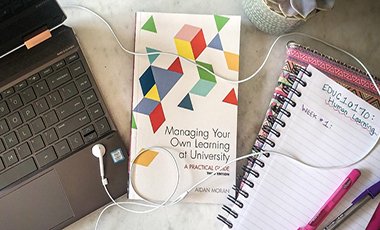
Student success at college is not just achieving high grades The National Forum for Teaching and Learning defines student success as the process by which students fulfil their potential and flourish at college and in society. This is a broader activity than simply achieving high grades. Psychosocial competencies are core to the definition of student success: these are the ‘soft skills’ or ‘non-cognitive skills’ that enable students to cope well with learning challenges, engage deeply in learning, and develop their identities as learners and as active citizens. Transitions are a key issue within this priority area, with transitions such as the move from school to college presenting both challenges and opportunities for students.
Initiative
Programmatic Approaches to Assessment and Feedback in Education
About this initiative
This initiative seeks to address some of the challenges associated with assessment overload and reliance on traditional modes of assessment through the piloting, development and evaluation of programmatic assessment strategies, which are grounded in disciplinary contexts and aligned to institutional needs. During the COVID-19 crisis many student surveys have highlighted the difficulties experienced regarding assessment – in particular workload. However, students also identified a number of benefits, for example during the transition, there was widespread adoption of alternative modes of assessment and continuous assessment, which students found useful when deadlines are staggered (USI, 2020). There is considerable evidence in the literature which points to the challenges relating to the excessive number of assessment tasks for students and the absence of programmatic approaches to assessment, which enable students to apply concepts and theories across modules within their programme of study and encourage programme teams to broaden the types of assessment (e.g. Harland et al. 2015; O’Neill 2019; Price et al. 2011). Working in collaboration, LEAD, faculty members and student advocates will seek to explore and apply a contextualised model for mapping assessment practices within a programme and identifying opportunities for more integrated and holistic assessment practices and the adoption of a variety of modes of assessment across a programme. The initiative will evaluate the model in terms of how it can enhance the learning experience of students and the teaching experience of staff in HE.
Lead organisations
Affiliated organisations
Linked open educational resources
Initiative details
Funding programmes SATLE
Themes Student Success
Award year
2020Funding amount (€)
47500Contributors
Related initiatives
Using Acceptance & Commitment Therapy to Reduce Academic Procrastination
Although academic procrastination is a common feature of university life (affecting 50-95% of students), research suggests it is highly problematic (Scent & Boes, 2014). Academic procrastination is associated with diminished well-being, poor quality of life, high stress, poor university performance, and university dropout (Glick & Orsillo, 2015).

Creative Writing Support
The Learning Enhancement Project set out to supplement existing writing services offered by the UCD Writing Centre, by offering support to students in creative writing. Creative Writing is one of the most successful and fastest growing subjects in the College of Arts and Humanities. With a large elective programme, the new BA in English with Creative Writing, and provision at MA, MFA and PhD levels, there is a real demand for support for creative writing students.