

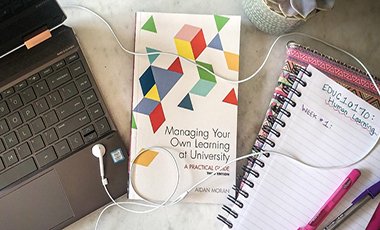
Student success at college is not just achieving high grades The National Forum for Teaching and Learning defines student success as the process by which students fulfil their potential and flourish at college and in society. This is a broader activity than simply achieving high grades. Psychosocial competencies are core to the definition of student success: these are the ‘soft skills’ or ‘non-cognitive skills’ that enable students to cope well with learning challenges, engage deeply in learning, and develop their identities as learners and as active citizens. Transitions are a key issue within this priority area, with transitions such as the move from school to college presenting both challenges and opportunities for students.
Initiative
Enhancing Resilience in Dental Undergraduate Training
About this initiative
Resilience is complex and multifaceted, involving numerous domains. It is an important competence for dental health professionals, as their professions are highly demanding and can lead to exhaustion and burnout. Burnout can limit effectiveness by reducing caring interactions and increasing medical errors. These significant challenges cause concerns over the mental and general health issues experienced by professionals. The rationale for this initiative is to enhance emotional resilience in the educational curriculum to prepare all dental cohorts – Dental Science, Dental Hygiene, Dental Technology, Dental Nursing and Orthodontic Therapy students for the transition to the workplace. The initiative addresses the educational objectives set out by the National Oral Health Policy (NOHP) Smile agus Sláinte to reform dental education training and Goals 2 and 3 of the Trinity Strategic plan (2020-2025) ‘We will support a transformative student experience’ and ‘Practice next generation teaching and learning’. The core module will be developed as an online module through digital learning and will be aligned with the clinical practice modules across all dental undergraduate curricula. The module will consist of five ECTS comprising of six stand-alone units. Each unit will be supported by online discussion and experiential learning through case studies, reflective writing, rubric peer assessment, quizzes and self-evaluation. The module will utilise an online discussion forum where students can further reflect on the module content, recommended readings and engage with peers. It will embrace reflective and resilience practices to ensure that final year students are ready for the transition from student to dental professionals.
Lead organisations
Affiliated organisations
Linked open educational resources
Initiative details
Funding programmes SATLE
Themes Student Success
Award year
2020Funding amount (€)
38000Contributors
Related initiatives
Using Acceptance & Commitment Therapy to Reduce Academic Procrastination
Although academic procrastination is a common feature of university life (affecting 50-95% of students), research suggests it is highly problematic (Scent & Boes, 2014). Academic procrastination is associated with diminished well-being, poor quality of life, high stress, poor university performance, and university dropout (Glick & Orsillo, 2015).

Creative Writing Support
The Learning Enhancement Project set out to supplement existing writing services offered by the UCD Writing Centre, by offering support to students in creative writing. Creative Writing is one of the most successful and fastest growing subjects in the College of Arts and Humanities. With a large elective programme, the new BA in English with Creative Writing, and provision at MA, MFA and PhD levels, there is a real demand for support for creative writing students.