

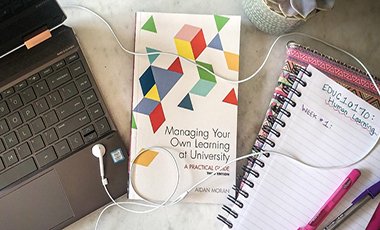
Student success at college is not just achieving high grades The National Forum for Teaching and Learning defines student success as the process by which students fulfil their potential and flourish at college and in society. This is a broader activity than simply achieving high grades. Psychosocial competencies are core to the definition of student success: these are the ‘soft skills’ or ‘non-cognitive skills’ that enable students to cope well with learning challenges, engage deeply in learning, and develop their identities as learners and as active citizens. Transitions are a key issue within this priority area, with transitions such as the move from school to college presenting both challenges and opportunities for students.
About this initiative
With the advent of wider participation in Higher Education, we need to ensure that Learning and Teaching practices reflect the increasing diversity present in the classroom. Students can include lifelong learners, international students, first generation students, students with disabilities and mature students. This initiative aims to support our increasingly diverse student population by creating a professional development resource for staff on inclusive assessment. This initiative is predicated on the Universal Design for Learning (UDL) approach, which is designed to improve the educational experience of all students. Underpinned by neuroscience and cognitive psychology, UDL encourages the flexible design of curriculum and assessment and supports students to become more autonomous, self-directed learners. Objectives:
• To support staff to ensure assessment practices are inclusive of all students.
• To provide a development pathway for staff engaging in the introductory UDL badge as well as collating good practice examples to enhance CIRTL’s accredited LandT courses.
• To integrate the UDL Framework into all aspects of teaching and learning in support of an inclusive university.
Outputs/Outcomes:
• Creation of a professional development offering for staff relating to inclusive assessment.
• Alignment of staff development offering with existing UCC Assessment policy, group work policy, UCC 2022 Strategic Pivot.
• Piloting of emergent materials and resources with staff.
• Collation of good practice examples of inclusive assessment.
• Tool/Checklist for staff to use when designing or reviewing assessments.
• Short guide to navigating the assessment procedures in UCC with a UDL lens.
• Collation of de novo case studies on how to implement inclusive assessments based on mentored work with staff members seeking to modify existing assessment.
Lead organisations
Affiliated organisations
Linked open educational resources
Initiative details
Funding programmes SATLE
Themes Student Success
Award year
2020Funding amount (€)
62136Contributors
Related initiatives
Using Acceptance & Commitment Therapy to Reduce Academic Procrastination
Although academic procrastination is a common feature of university life (affecting 50-95% of students), research suggests it is highly problematic (Scent & Boes, 2014). Academic procrastination is associated with diminished well-being, poor quality of life, high stress, poor university performance, and university dropout (Glick & Orsillo, 2015).

Creative Writing Support
The Learning Enhancement Project set out to supplement existing writing services offered by the UCD Writing Centre, by offering support to students in creative writing. Creative Writing is one of the most successful and fastest growing subjects in the College of Arts and Humanities. With a large elective programme, the new BA in English with Creative Writing, and provision at MA, MFA and PhD levels, there is a real demand for support for creative writing students.