

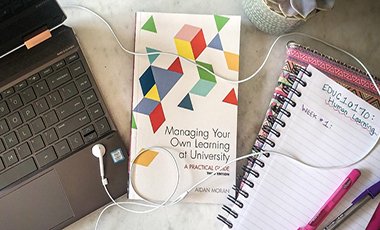
Student success at college is not just achieving high grades The National Forum for Teaching and Learning defines student success as the process by which students fulfil their potential and flourish at college and in society. This is a broader activity than simply achieving high grades. Psychosocial competencies are core to the definition of student success: these are the ‘soft skills’ or ‘non-cognitive skills’ that enable students to cope well with learning challenges, engage deeply in learning, and develop their identities as learners and as active citizens. Transitions are a key issue within this priority area, with transitions such as the move from school to college presenting both challenges and opportunities for students.
Initiative
Work Integrated Learning (WIL) Quality be Framed? Designing a Quality Framework for Work-integrated Learning
About this initiative
Work-integrated learning (WIL) refers to the integration of disciplinary knowledge and skills (Boud and Solomon, 2001), between theoretical, practical and general life experience (Cooper, Orrell and Bowden 2010). It has now become an integral part of many higher education (HE) programmes, with various forms of WIL being adopted. Its overarching aim is to integrate discipline learning and workplace application, so as to support students to become work-ready. WIL curricula includes inter alia internships, placements and supervised practice. However, Johnston et al. (2016) have called for the need for a clearer understanding of WIL parameters in order to develop appropriate quality standards and to assess its impact. Having a better understanding of WIL will not only support institutions in providing quality WIL but will help to identify new models and measures which can be adopted in order to embed work-integrated learning (McRae and Johnston, 2016). In addition, having a robust framework for WIL will support the design of future WIL including the alignment of teaching, learning and assessment strategies, learner support and preparation processes. This initiative will focus on the design and implementation of a work-integrated learning quality framework that will not only model good practice elsewhere but will ensure that the most effective learning possible will be achieved through WIL. This will include all aspects of WIL, from engagement with stakeholders, to the design and evaluation of WIL programmes, and will include an exploration of the policies, resources and initiatives required to support and assess WIL.
Lead organisations
Affiliated organisations
Linked open educational resources
Initiative details
Funding programmes SATLE
Themes Student Success
Award year
2020Funding amount (€)
40000Contributors
Related initiatives

Using Acceptance & Commitment Therapy to Reduce Academic Procrastination
Although academic procrastination is a common feature of university life (affecting 50-95% of students), research suggests it is highly problematic (Scent & Boes, 2014). Academic procrastination is associated with diminished well-being, poor quality of life, high stress, poor university performance, and university dropout (Glick & Orsillo, 2015).

Creative Writing Support
The Learning Enhancement Project set out to supplement existing writing services offered by the UCD Writing Centre, by offering support to students in creative writing. Creative Writing is one of the most successful and fastest growing subjects in the College of Arts and Humanities. With a large elective programme, the new BA in English with Creative Writing, and provision at MA, MFA and PhD levels, there is a real demand for support for creative writing students.