

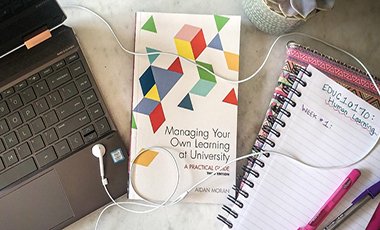
Student success at college is not just achieving high grades The National Forum for Teaching and Learning defines student success as the process by which students fulfil their potential and flourish at college and in society. This is a broader activity than simply achieving high grades. Psychosocial competencies are core to the definition of student success: these are the ‘soft skills’ or ‘non-cognitive skills’ that enable students to cope well with learning challenges, engage deeply in learning, and develop their identities as learners and as active citizens. Transitions are a key issue within this priority area, with transitions such as the move from school to college presenting both challenges and opportunities for students.
About this initiative
TU Dublin’s Strategic Intent 2030 sets out the University’s ambitions for the next decade, to ‘Create a Better World, Together’, centred around the 3 pillars of People, Planet and Partnership. The TU Dublin Education Model is core – in nurturing bright minds, creativity and ambition, this dynamic new model aims to transform learning opportunities and experiences for a diverse student body, many of whom will be operating in challenging circumstances. New approaches, new pedagogies and utilisation of new technologies that impact student success are the focus of this SATLE 2020 initiative and support the development of the model, including:-
• developing digitally-literate and sustainability-responsible graduates
• utilising evidence-based analytics to target supports for a diverse student base; and
• providing authentic assessment approaches through real-world contexts that extend the student’s knowledge, higher-order thinking and future-ready competencies.
• Digital Skills efforts will focus on: a digital skills diagnostic tool for staff and students to self-assess their capabilities; a repository of resources, including guides, learning resources, training and one-to-one coaching; and a dynamic peer mentoring scheme for students.
• The Sustainability strand will consolidate the University’s Education for Sustainability initiatives; develop a TU Dublin–wide, including SDGs, literacy; and provide relevant continuing professional development (CPD) opportunities for lecturing staff.
• Capacity-building in Learning Analytics will deliver a robust Learning Analytics policy; additional technology tools, and a suite of training resources and toolkit.
• Work on assessment will produce a Framework for Authentic Assessment and Feedback, with key principles, methodologies and practice enabling across all TU Dublin programmes.
Lead organisations
Affiliated organisations
Linked open educational resources
Initiative details
Funding programmes SATLE
Themes Student Success
Award year
2020Funding amount (€)
575000Contributors
Related initiatives
Using Acceptance & Commitment Therapy to Reduce Academic Procrastination
Although academic procrastination is a common feature of university life (affecting 50-95% of students), research suggests it is highly problematic (Scent & Boes, 2014). Academic procrastination is associated with diminished well-being, poor quality of life, high stress, poor university performance, and university dropout (Glick & Orsillo, 2015).

Creative Writing Support
The Learning Enhancement Project set out to supplement existing writing services offered by the UCD Writing Centre, by offering support to students in creative writing. Creative Writing is one of the most successful and fastest growing subjects in the College of Arts and Humanities. With a large elective programme, the new BA in English with Creative Writing, and provision at MA, MFA and PhD levels, there is a real demand for support for creative writing students.