

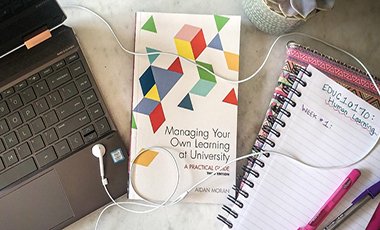
Student success at college is not just achieving high grades The National Forum for Teaching and Learning defines student success as the process by which students fulfil their potential and flourish at college and in society. This is a broader activity than simply achieving high grades. Psychosocial competencies are core to the definition of student success: these are the ‘soft skills’ or ‘non-cognitive skills’ that enable students to cope well with learning challenges, engage deeply in learning, and develop their identities as learners and as active citizens. Transitions are a key issue within this priority area, with transitions such as the move from school to college presenting both challenges and opportunities for students.
About this initiative
The COVID-19 crisis, in forcing most teaching to an online mode, has not only presented challenges in assessing online, but has also exposed some of the underlying limitations of many current assessment practices in higher education (including the extent to which there is alignment with learning outcomes and programme goals). One of the principal concerns, also, for many, during this period has centred on the academic integrity of the assessment processes being used. Without doubt the rapid pivot to online teaching and assessment led to innovation and change, with many seizing the opportunity to think differently in terms of the technologies used to support learning or in developing new types of assessments adapted to suit the new circumstances. This initiative will take a pragmatic approach to assessment reform within the institution, combining policy change, professional development, and reform and innovation at the level of the discipline and within programmes. This work will involve partnership with academic colleagues, students, and with the QQI (Quality and Qualifications Ireland). We will address 4 interrelated themes:
• Academic Integrity
• Assessment and Feedback
• Programme focused assessment
• Authentic Assessment
Outcomes will include: better understanding of the range of potential approaches to assessment; embedding of assessment into course design; more use of authentic assessment and effective, empowering approaches to feedback; refreshed policy and guidelines; CPD materials and workshops (including a badged online course). Use will be made of the wide range of existing materials and literature on these topics, adapted to suit the particular needs of disciplines, programme teams, and schools.
Lead organisations
Affiliated organisations
Linked open educational resources
Initiative details
Funding programmes SATLE
Themes Student Success
Award year
2020Funding amount (€)
120000Contributors
Related initiatives

Using Acceptance & Commitment Therapy to Reduce Academic Procrastination
Although academic procrastination is a common feature of university life (affecting 50-95% of students), research suggests it is highly problematic (Scent & Boes, 2014). Academic procrastination is associated with diminished well-being, poor quality of life, high stress, poor university performance, and university dropout (Glick & Orsillo, 2015).

Creative Writing Support
The Learning Enhancement Project set out to supplement existing writing services offered by the UCD Writing Centre, by offering support to students in creative writing. Creative Writing is one of the most successful and fastest growing subjects in the College of Arts and Humanities. With a large elective programme, the new BA in English with Creative Writing, and provision at MA, MFA and PhD levels, there is a real demand for support for creative writing students.